
Macular Degeneration
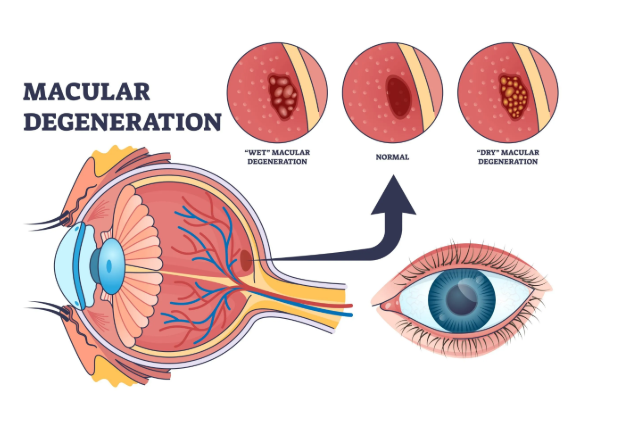
The “macula” is the name of the central vision area of the retina. The macula allows us to see all details like faces, TV, computer, reading, driving, etc. If the macula does not function properly, we are left with only peripheral vision and many tasks become difficult or impossible. Macular degeneration implies a deterioration of the vision cells and often the underlying pigment layer in the macula. Age-related macular degeneration, or AMD, is the most common cause of vision loss in Americans 60 years of age or older. AMD can develop slowly so that people notice little change in their overall eye health. In others, however, age related macular degeneration progresses faster and may lead to rapid loss of central vision in one or both eyes.
The Amsler Grind
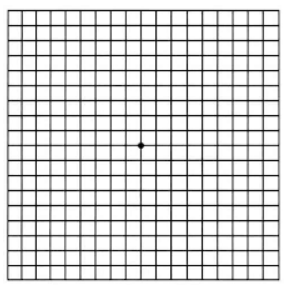
A Simple at home test, while not a definitive diagnosis tool, can indicate that a visit with your eye doctor may be needed. The Amsler grid is an at-home testing tool used to monitor central vision and detect early or worsening signs of macular degeneration (AMD). It works by helping you notice distorted lines (metamorphopsia) or missing spots (scotomas) in your visual field where you should see a complete grid with straight lines.
Wet Macular Degeneration
Wet Macular Degeneration is a much less common but more severe form of macular degeneration than Dry AMD. WMD occurs when abnormal blood vessels grow under the retina and leak fluid or blood. This leakage distorts and damages the macula, leading to rapid, painless central vision loss.
Macular Degeneration and Cardiovascular Disease
Research reveals a strong, bidirectional link between Age-Related Macular Degeneration (AMD) and Cardiovascular Disease (CVD). CVD and AMD share many modifiable and non-modifiable risk factors. Because the blood vessels in the retina are highly sensitive, they often reflect the overall health of your body's vascular system.
Explore Treatment Options
Macular degeneration clinical trials are evaluating breakthrough therapies for both dry AMD (geographic atrophy) and wet AMD. Exciting fields of research include stem cell transplants, modifier gene therapies, and subretinal implants aimed at restoring central vision and vastly reducing the frequency of current eye injections.
Although there are no cures for MD, treatments may help slow or even reverse associated vision loss. Such treatments may include the use of intraocular injections administered in an often painless in-office procedure.